
A trip to the veterinarian can feel routine to us, but your pet may see it very differently. The carrier appears. The car starts moving. Then come unfamiliar smells, strange sounds, new people, and hands checking sensitive areas.
Even a friendly dog or confident cat may become nervous in that situation.
The good news is that a calmer veterinary visit often begins at home. A little preparation can help your pet feel safer, make the examination easier, and allow you more time to discuss important health concerns with the veterinary team.
At Sunshine Pet Hospital, we understand that every animal responds differently. Some pets walk through our door ready to make friends. Others need more time, space, and reassurance. If you are comparing vet clinics in Aurora IL, look for a practice that listens to your concerns and treats your pet as an individual rather than following the same approach for every patient.
Contents
Why Do Pets Become Anxious at the Vet?
Animals rely heavily on familiar routines, scents, and surroundings. A veterinary appointment introduces several changes within a short period.
Your pet may be uncomfortable because of:
- An unfamiliar carrier or leash
- Motion during the car ride
- Sounds and smells from other animals
- Slippery floors or bright examination rooms
- Memories of a previous uncomfortable visit
- Being touched while already sick or in pain
- Separation from you during a procedure
- Sensitivity to unfamiliar people
Stress can also build throughout the trip. A cat who struggles to enter the carrier may already be frightened before leaving the house. A dog who becomes carsick may arrive feeling anxious and physically uncomfortable.
Veterinary researchers have found that fear during veterinary visits is common among both dogs and cats. A published review of methods for reducing fear in veterinary settings noted that preparation, positive reinforcement, appropriate handling, and changes to the clinic environment can all play a role in improving the experience. You can read the review of fear and stress in veterinary patients for more information.
Recognize Your Pet’s Early Signs of Stress
Stress does not always look dramatic. Many animals communicate discomfort through small changes in posture or behavior.
Signs of stress in dogs
A nervous dog may:
- Pant when the weather is not warm
- Pace or pull toward the exit
- Tuck the tail
- Lower the head or body
- Tremble
- Yawn repeatedly
- Lick the lips
- Avoid eye contact
- Refuse a favorite treat
- Bark, growl, or attempt to hide
A dog who suddenly freezes is not necessarily calm. Remaining completely still can be a sign that the dog feels overwhelmed.
Signs of stress in cats
A worried cat may:
- Crouch at the back of the carrier
- Flatten the ears
- Tuck the paws and tail tightly against the body
- Dilate the pupils
- Breathe rapidly
- Vocalize or hiss
- Swat when approached
- Refuse food
- Attempt to escape
- Remain unusually quiet
Learning your pet’s early signals gives you a chance to slow down before mild concern becomes intense fear.
Start Preparing Several Days Before the Appointment
Avoid waiting until the morning of the visit to introduce a carrier, practice handling, or take your pet for their first car ride in months. Short, positive practice sessions are usually easier for an animal to manage.
1. Help your cat feel safe inside the carrier
Many cats only see their carrier immediately before something unfamiliar happens. Over time, the carrier itself becomes a warning sign.
Instead of storing it in a closet, leave it open in a quiet area of your home. Place familiar bedding inside, along with a few treats or a favorite toy. Allow your cat to investigate without being pushed or trapped.
You can gradually build a positive association by:
- Rewarding your cat for approaching the carrier.
- Placing treats near the entrance.
- Moving treats farther inside over several sessions.
- Briefly closing the door once your cat enters comfortably.
- Carrying the closed carrier a short distance before opening it again.
This approach is supported by research. In one controlled study, cats that received carrier training showed fewer signs of stress during transportation. Their veterinary examinations were also completed more quickly than those of cats without the same preparation. The results suggest that patient, reward-based practice at home can make a measurable difference.
If you recently adopted a cat, our guide to a smooth cat adoption in Aurora includes more advice for creating a comfortable transition.
2. Make the car less mysterious
For many pets, every car ride ends at a veterinary clinic or grooming appointment. That pattern can make anxiety begin as soon as the car door opens.
Try taking your pet on a few short practice trips. Start by sitting together in the parked car for a minute or two. On another day, drive around the block and return home. Reward calm behavior afterward.
Dogs should be secured with an appropriate restraint or travel crate. Cats should remain inside a stable carrier. Do not allow an animal to move freely around the vehicle, sit on the driver’s lap, or lean out of an open window.
If your pet drools, cries, vomits, or becomes distressed during even a short drive, tell us before the appointment. Motion sickness and travel anxiety may require a different plan.
3. Practice gentle handling at home
A routine examination may include looking inside the ears and mouth, touching the paws, listening to the heart, and feeling the abdomen. You can help make these actions less surprising.
When your pet is relaxed, briefly touch one paw and offer a treat. Lift an ear for a second, then reward your pet. Gently run your hand along the legs, chest, and belly without restraining the animal.
Keep these sessions short. Stop if your pet pulls away, stiffens, growls, hisses, or appears uncomfortable. The purpose is to develop trust, not to force cooperation.
What Should You Bring to a Vet Appointment?
Being organized reduces delays and helps the veterinary team understand your pet’s needs.
Use this veterinary visit checklist:
- Medical records from previous clinics
- Vaccine and laboratory records
- A list of current medications and supplements
- Notes about changes in appetite, thirst, sleep, or behavior
- Photos or videos of symptoms that happen at home
- A fresh stool sample if requested
- Your pet’s usual treats, if dietary restrictions allow them
- A familiar blanket or small toy
- Questions you want to ask the veterinarian
- Details about previous fearful or aggressive reactions
Videos are especially useful for intermittent symptoms. A pet may walk normally in the examination room even though you noticed limping at home. A cough, tremor, unusual movement, or behavioral episode may also be easier to evaluate when the veterinary team can see what happened.
If your new dog has recently joined the family, review our 7-day new pet checklist before the appointment. You can also learn why an adopted dog needs a veterinary visit within the first week.
What Should You Do on the Day of the Visit?
Keep your routine as normal as possible
Pets notice rushed mornings and sudden changes. Give yourself enough time to get ready without chasing your cat around the house or pulling your dog away from a hiding place.
Take dogs for a calm bathroom break before leaving. For cats, prepare the carrier early and move slowly.
Ask the clinic whether your pet should eat before the appointment. Food instructions may depend on scheduled testing, sedation, anesthesia, or your pet’s medical condition. Do not withhold food unless the veterinary team tells you to do so.
Bring treats your pet truly enjoys
Small, high-value treats can create positive associations with entering the building, stepping onto the scale, or allowing an examination.
Some pets are too nervous to eat. Refusing food is useful information because it may indicate that stress is rising. Do not force the treat or place food directly in front of an animal that is growling or guarding space.
Secure your pet before opening the car door
A nervous animal may react unpredictably in a busy parking lot. Attach your dog’s leash before opening the door. Keep your cat’s carrier completely closed until you are inside a secure space and a team member asks you to open it.
Check collars, harnesses, and carrier latches before leaving home.
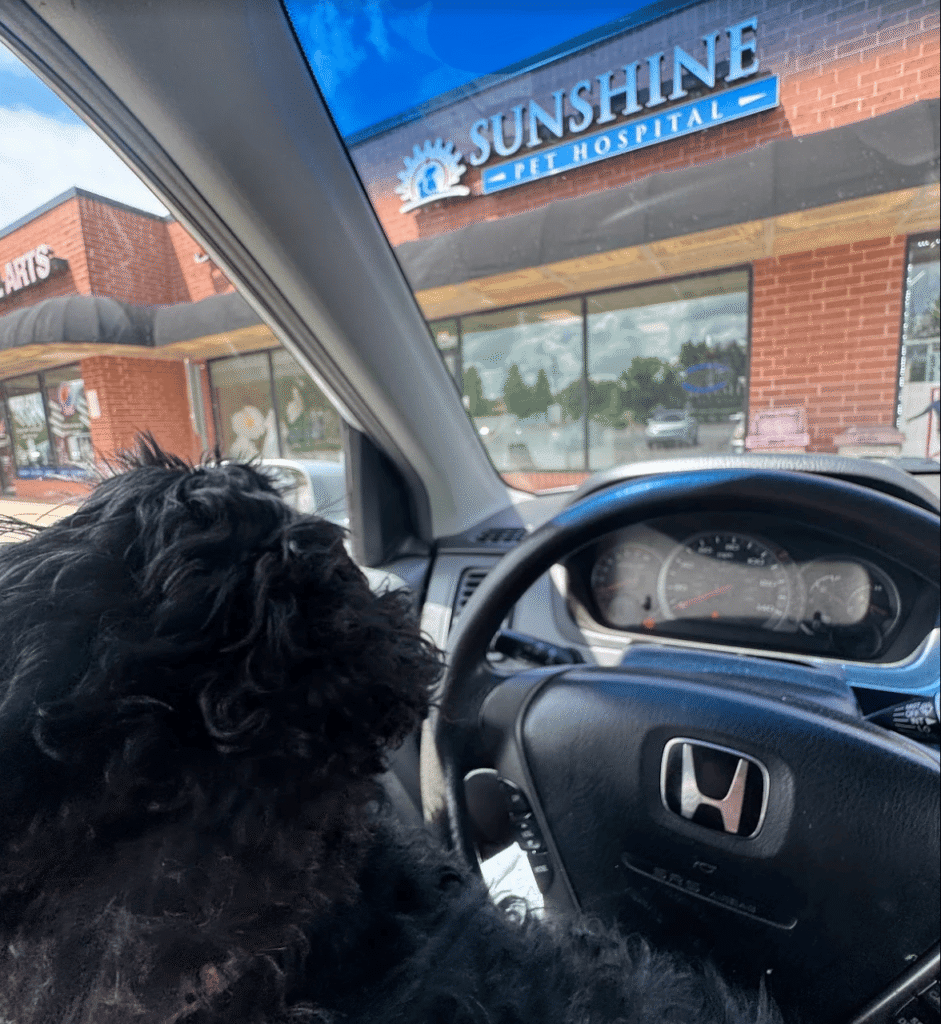
The photograph accompanying this article captures an everyday part of veterinary care: a dog waiting in a car outside Sunshine Pet Hospital. That short moment before entering the clinic is a good time to pause, check the leash, and let the pet observe the surroundings safely.
Tell the Veterinary Team About Anxiety Before You Arrive
When contacting vet clinics in Aurora IL, mention any history of fear, escape attempts, growling, biting, scratching, or severe travel distress. Sharing this information is not an admission that you have a “bad” pet. It helps the team prepare.
Tell us:
- What usually triggers your pet
- Whether your pet prefers men or women
- How your pet reacts to other animals
- Whether treats help
- If your pet dislikes having certain areas touched
- What happened during previous appointments
- Whether your pet has ever needed medication or sedation
In some cases, a veterinarian may recommend medication before the visit. These prescriptions are selected according to the animal’s health, age, medical history, and type of anxiety.
Never give your pet human anti-anxiety medication, sleep aids, pain relievers, or leftover prescriptions without veterinary instructions. A drug that is safe for one person or animal may be dangerous for another.
A Practical Example: Two Different Ways to Handle a Nervous Cat
Consider a cat named Luna who hides whenever her carrier appears.
In the first scenario, the carrier comes out ten minutes before the appointment. Luna runs under the bed. Her owner pulls her out, pushes her into the carrier, and immediately begins a 20-minute drive. By the time Luna arrives, she is panting and will not accept food.
Now imagine a different approach. The carrier stays open in the living room for two weeks. Luna finds treats inside several times. Her owner practices closing the door for five seconds, then gradually carries her around the house. They take two short practice drives before the appointment.
The second plan cannot guarantee that Luna will feel completely relaxed. It does, however, remove some of the surprises that caused her fear. This is an illustrative example, but it reflects the carrier-training method studied by veterinary behavior researchers.
How to Help Your Pet During the Examination
Your role does not end when you enter the examination room.
Speak in a calm, normal voice. Avoid repeatedly saying “It’s okay” in a tense tone, since your pet may respond more to your body language than the words. Follow the veterinary team’s directions about where to stand and how to interact.
Do not attempt to hold your pet tightly unless asked. Strong restraint can make some animals feel trapped and may increase the risk of injury.
If your pet is becoming more distressed, say something. A short pause, a different position, a towel, a treat, or a change in handling may help. In other situations, postponing a nonurgent procedure and returning with a new plan may be the safest choice.
What to Do After the Appointment
Once you arrive home, give your pet time to decompress.
Dogs may benefit from a quiet walk, water, and rest. Cats often prefer a familiar room with food, water, a litter box, and a hiding place.
If you have multiple cats, the returning cat may smell different after visiting the clinic. Another cat in the household may hiss or avoid them temporarily. Give them space and supervise their reintroduction rather than forcing immediate contact.
Follow all instructions about medications, feeding, activity restrictions, and side effects. If your pet received vaccines, read our article addressing common dog vaccine concerns and reactions.
Contact the clinic if your pet shows a concerning change after the visit. If your pet has trouble breathing, collapses, experiences uncontrolled bleeding, or shows another life-threatening symptom, seek urgent care. Our guide to pet emergencies in Aurora explains warning signs that should not be ignored.
Quick Answers About Stress-Free Veterinary Visits
How can I calm my pet before a vet visit?
Use gradual carrier or car training, keep your normal routine, bring familiar items, and reward calm behavior. Tell the clinic about your pet’s anxiety before arriving.
Should I feed my pet before the appointment?
Ask the veterinary team. Feeding instructions depend on the reason for the visit and whether your pet may need bloodwork, sedation, anesthesia, or another procedure.
Can a veterinarian prescribe medication for visit anxiety?
Yes, a veterinarian may recommend pre-visit medication when appropriate. The choice and dosage must be based on your pet’s individual medical needs.
What if my pet becomes aggressive at the vet?
Aggressive behavior often comes from fear, pain, or feeling trapped. Inform the team before the visit so they can create a safer handling plan. Never punish your pet for being frightened.
How early should I arrive?
Arriving a few minutes early is usually helpful, but waiting too long may increase anxiety for some pets. Ask whether you can wait in your vehicle if your pet becomes stressed around other animals.
Compassionate Veterinary Care for Aurora-Area Pets
Sunshine Pet Hospital is a veterinary practice in Aurora, Illinois, with a dedicated and experienced professional team. Since opening in 2021, we have worked to provide attentive pet health services at an affordable cost for families in Aurora, Naperville, Oswego, Yorkville, Plainfield, Batavia, and nearby communities.
Our services include:
- Pet wellness examinations
- Pet vaccinations
- Dental examinations and cleanings
- Pet surgical procedures
- Flea and tick prevention
- Diagnostic services
- Dermatology care
- Senior-pet wellness
- Additional preventive and medical care
Choosing among vet clinics in Aurora IL involves more than comparing a list of services. Your pet also deserves a team that listens to your concerns, explains the available options, and understands that fear can affect both behavior and medical care.
Plan a More Comfortable Visit With Sunshine Pet Hospital
A stress-free visit does not mean your pet must be perfectly calm. The goal is to reduce unnecessary fear, recognize discomfort early, and make each experience a little easier than the last.
If your dog or cat becomes nervous during travel, handling, or veterinary appointments, tell us when you schedule. We can discuss what has happened in the past and help you prepare for the upcoming visit.
Request an appointment with Sunshine Pet Hospital or call 630-340-3443. Visit us at 3450 Montgomery Road, Unit 14, Aurora, IL 60504, and let our team help your pet receive the care they need in a patient, welcoming environment.