Bringing home an adopted dog is exciting, emotional, and sometimes a little overwhelming. Whether you adopted from a local shelter, rescue group, foster family, or private rehoming situation, those first few days are full of new routines, new smells, new behaviors, and new questions.
Contents
Your dog may seem healthy, happy, and ready to settle in. But even when everything looks normal on the outside, a veterinary visit within the first week is one of the smartest steps you can take after dog adoption in Aurora, IL.
At Sunshine Pet Hospital, we meet many newly adopted dogs and their families. Some dogs arrive with complete records. Others come with partial paperwork, unknown medical history, vaccine gaps, dental concerns, parasites, or stress-related symptoms that may not appear right away. A first-week vet visit helps create a clear health baseline, protects your household, and gives your new dog a safer start in their new home.
Need trusted care for your dog in Aurora?
Visit Sunshine Pet Hospital to explore our veterinary services.
Why the First Week After Dog Adoption Matters
The first week is an adjustment period for your dog’s body and mind. Many adopted dogs are moving from one environment to another, and that transition can affect their appetite, digestion, sleep, behavior, and immune system.
Some dogs seem calm at first because they are still decompressing. Others may be overly excited, nervous, clingy, shy, or unsure of their surroundings. This is normal, but it also makes the first week an important time to check for hidden health concerns.
A veterinary exam soon after adoption gives you answers early instead of waiting until a small issue becomes a bigger problem. It also helps you understand what is normal for your dog, what needs attention, and what preventive care should be started right away.
For families searching for dog adoption in Aurora, IL, the goal is not only to find the right dog. It is also helpful to help the dog stay healthy after coming home.
Shelter Records Are Helpful, But They May Not Tell the Whole Story
Most shelters and rescues do their best to provide medical records. These may include vaccine history, spay or neuter status, microchip details, medications, parasite treatment, and notes about behavior or previous illness.
However, adoption paperwork can sometimes be incomplete. A dog may have been transferred from another shelter, found as a stray, surrendered without full records, or treated before arriving at the rescue. Even when records are available, your veterinarian can help interpret what they mean.
What Your Vet Will Review
During your first visit, we may review:
- Previous vaccine dates
- Rabies vaccination status
- Distemper/parvo vaccine history
- Bordetella or kennel cough vaccine history
- Spay or neuter records
- Heartworm test results
- Flea and tick treatment history
- Deworming records
- Microchip information
- Current or past medications
- Any shelter notes about appetite, coughing, limping, skin problems, or behavior
This review matters because your dog’s care plan should not be based on guessing. If there is a missing vaccine, overdue booster, unclear heartworm test, or unknown parasite prevention history, your vet can recommend the safest next step.
Vaccine Gaps Can Leave Your New Dog Unprotected
Vaccines are one of the most important parts of preventive dog care. They help protect your dog from serious diseases and help reduce health risks in the wider pet community.
After dog adoption in Aurora, IL, vaccine needs can vary. A young puppy may need a series of boosters. An adult dog may need updated core vaccines. A dog with an unknown history may need a carefully planned vaccine schedule based on age, health, lifestyle, and risk level.
Common Dog Vaccines to Discuss
Your veterinarian may talk with you about vaccines such as:
- Rabies
- Distemper
- Parvovirus
- Adenovirus
- Bordetella
- Canine influenza
- Leptospirosis
- Lyme disease
Not every dog needs every vaccine at the same time. A dog that goes to dog parks, daycare, grooming appointments, boarding facilities, or training classes may have different needs than a dog that mostly stays at home. That is why a personalized vaccine plan is better than a one-size-fits-all approach.
At Sunshine Pet Hospital, we help pet parents understand what their dog needs, why it matters, and when each vaccine or booster should be given.
Heartworm Testing Should Not Be Delayed
Heartworm disease is a serious condition spread by mosquitoes. It can affect dogs even if they spend most of their time indoors because mosquitoes can still get inside the home or bite during short outdoor walks.
Some adopted dogs may already have a recent heartworm test. Others may not. In some cases, the timing of a previous test may not fully reflect recent exposure. Your veterinarian can help decide whether your new dog needs testing now, retesting later, or immediate prevention.
Why Heartworm Prevention Matters
Heartworm disease can damage the heart, lungs, and blood vessels. Treatment can be expensive and stressful for the dog, while prevention is much easier. A first-week vet visit gives you the chance to start the right heartworm prevention plan safely.
This is especially important for newly adopted dogs because you may not know where the dog lived before, how often they were outside, or whether prevention was given consistently.
Fleas, Ticks, and Intestinal Parasites Are Common Adoption Concerns
Even clean, well-cared-for dogs can come home with parasites. Fleas, ticks, worms, and mites are not always obvious at first glance. Some dogs scratch, chew, or lick. Others show no clear symptoms.
A veterinary exam can check the skin, coat, ears, and overall condition of your dog. Your vet may also recommend a fecal test to look for intestinal parasites.
Signs Your Adopted Dog May Have Parasites
Watch for:
- Scratching or chewing at the skin
- Hair loss or irritated patches
- Black specks in the coat that may be flea dirt
- Scooting
- Diarrhea
- Vomiting
- Weight loss
- A bloated belly in puppies
- Visible worms in stool
- Low energy
Parasites are not just uncomfortable for your dog. Some can also affect other pets or people in the home. Starting flea, tick, heartworm, and intestinal parasite prevention early helps protect everyone.
Dental Health Is Often Overlooked After Adoption
When people think about a first vet visit, they often focus on vaccines and parasite prevention. But dental health is just as important.
Many adopted dogs arrive with tartar buildup, gum inflammation, broken teeth, retained baby teeth, bad breath, or oral pain. Some dogs continue eating normally even when their mouths hurt, so dental problems can be easy to miss.
Why Your Dog’s Mouth Needs a Checkup
Poor dental health can lead to pain, infection, tooth loss, and bacteria that may affect other parts of the body. During the first exam, your veterinarian can check your dog’s teeth and gums and explain whether your dog needs home dental care, professional cleaning, or further treatment.
At Sunshine Pet Hospital, we want pet parents to know that bad breath is not something to ignore. It can be a sign of dental disease, especially in adult and senior adopted dogs.
Microchip Checks Help Keep Your Dog Safe
A microchip is one of the best tools for helping reunite lost pets with their families. But after adoption, the chip information may still be connected to the shelter, rescue, previous owner, or outdated phone number.
During your dog’s first vet visit, ask your veterinarian to scan for a microchip. If a chip is found, confirm that the number matches your adoption paperwork and update the registration with your current contact details.
Why This Step Matters in Aurora
Newly adopted dogs may bolt through doors, slip out of collars, or panic during walks because they are still learning their new home and neighborhood. Even a calm dog can become frightened by traffic, construction, fireworks, or unfamiliar sounds.
A working microchip with updated information gives your dog an added layer of protection.
Nutrition Advice Can Prevent Digestive Problems
Many adopted dogs experience stomach upset during the first week. This can happen because of stress, a sudden food change, treats, new water, or underlying health issues.
It is tempting to buy a new food right away, especially if you want to give your dog the best. But switching too quickly can cause diarrhea, vomiting, gas, or loss of appetite.
What to Ask Your Vet About Food
At your first appointment, ask about:
- Whether to continue the shelter’s current food temporarily
- How to transition to a new diet
- How much to feed based on weight and body condition
- Puppy food vs. adult food
- Senior dog nutrition
- Food allergies or sensitivities
- Healthy treats for training
- Safe human foods and foods to avoid
- Weight management if your dog is underweight or overweight
Nutrition is not only about choosing a popular brand. It is about matching your dog’s diet to their age, size, health, activity level, and medical needs.
A First Vet Visit Helps Decode New Dog Behavior
Many behavior changes after adoption are part of the adjustment process. Your dog may be quiet, nervous, extra sleepy, clingy, jumpy, or unsure of where to go potty. Some dogs do not show their full personality until they feel safe.
Still, behavior can also be connected to health. Pain, ear infections, dental disease, skin irritation, parasites, urinary problems, and digestive discomfort can all affect how a dog acts.
Behavior Topics to Discuss
Your vet can help you understand:
- House-training challenges
- Crate training concerns
- Fear or anxiety
- Leash walking issues
- Appetite changes
- Sleep changes
- Excessive barking
- Resource guarding concerns
- Introducing your dog to other pets
- When to consider a trainer or behavior support
This is another reason a first-week appointment is so helpful. It gives you professional guidance before habits become harder to manage.
What to Bring to Your Dog’s First Vet Appointment
To make the visit easier, bring anything you received during the adoption. Even small details can help.
Helpful Items to Bring
- Adoption paperwork
- Vaccine records
- Spay or neuter records
- Microchip information
- Medication list
- Current food name and feeding amount
- Any supplements
- Recent stool sample, if requested
- Notes about coughing, sneezing, vomiting, diarrhea, scratching, limping, or appetite changes
- Questions you want to ask the vet
You do not need to know everything. That is what the appointment is for. Your veterinarian can help organize the information and create a plan.
What Happens During the First Exam at Sunshine Pet Hospital
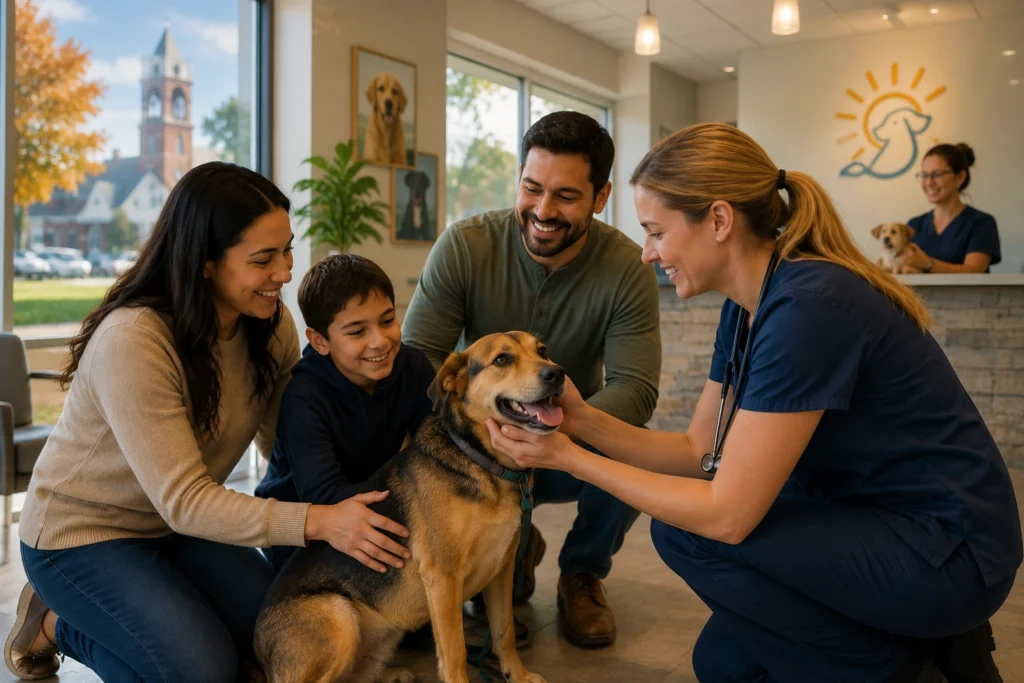
At Sunshine Pet Hospital, your dog’s first visit is more than a quick checkup. It is a chance to understand your new pet as an individual.
Your dog’s exam may include a nose-to-tail physical check, weight and body condition review, vaccine record evaluation, dental check, skin and coat exam, ear exam, parasite screening recommendations, heartworm prevention discussion, nutrition guidance, and answers to your new pet questions.
We also want to make the visit as comfortable as possible. Adopted dogs may be nervous in new places, so we encourage pet parents to bring treats, speak gently, and give their dog time to settle.
When Your New Dog Should See a Vet Immediately
While a first-week visit is recommended for most newly adopted dogs, some symptoms should not wait.
Call a veterinarian sooner if your dog has:
- Trouble breathing
- Repeated vomiting
- Bloody diarrhea
- Not eating for more than 24 hours
- Extreme tiredness or weakness
- Coughing that gets worse
- Pale gums
- Seizures
- Pain, limping, or swelling
- Open wounds
- Signs of heatstroke
- Difficulty urinating
- Sudden behavior changes
If your dog seems seriously ill, do not wait for a routine appointment. Seek veterinary help right away.
Building a Long-Term Wellness Plan After Adoption
Adoption is the beginning of your dog’s story with your family. A first-week vet visit helps build the foundation for long-term health.
Your dog’s ongoing plan may include annual pet wellness exams, vaccine boosters, dental care, heartworm testing, parasite prevention, weight checks, nutrition updates, blood work when needed, and age-appropriate care as your dog grows older.
For dog adoption in Aurora, IL, this kind of preventive care is especially valuable because it helps you move from uncertainty to confidence. Instead of wondering whether your dog is protected, healthy, or adjusting normally, you can get clear answers and a plan that fits your pet.
Schedule Your New Dog’s First Visit With Sunshine Pet Hospital
If you recently welcomed a dog into your home, we would love to help your new companion start strong. Schedule a wellness visit with Sunshine Pet Hospital in Aurora, IL, so our veterinary team can review your dog’s records, check for hidden health concerns, and guide you through vaccines, parasite prevention, dental care, nutrition, and adjustment questions.
FAQs About Dog Adoption in Aurora, IL, and First Vet Visits
How soon should I take my adopted dog to the vet?
Most newly adopted dogs should see a veterinarian within the first week. If your dog is sick, injured, not eating, coughing, vomiting, or having diarrhea, schedule care sooner.
What if the shelter already gave my dog vaccines?
Shelter vaccines are helpful, but your veterinarian should still review the records. Your dog may need boosters, lifestyle vaccines, rabies confirmation, or a future vaccine schedule.
Does my adopted dog need heartworm testing?
Many adopted dogs should have heartworm testing, especially if their history is unknown or records are incomplete. Your vet can recommend the right testing and prevention plan.
Should I change my dog’s food after adoption?
Avoid sudden food changes unless your veterinarian recommends it. A gradual transition is usually better for digestion. Your vet can help choose the right diet based on your dog’s needs.
Can my vet check if my adopted dog has a microchip?
Yes. Your veterinarian can scan your dog for a microchip and help you confirm whether the registration information needs to be updated.
A Healthier Start for Your Newly Adopted Dog
Dog adoption in Aurora, IL is a meaningful decision, and the first week can shape your dog’s comfort, health, and confidence in their new home. A veterinary visit helps catch hidden concerns, close vaccine gaps, check dental health, screen for parasites, confirm microchip details, and create a care plan that fits your dog’s life.
At Sunshine Pet Hospital, we are here to support you from the first week through every stage of your dog’s life. If your new dog has just joined your family, Contact Sunshine Pet Hospital today to request an appointment and start their wellness journey with trusted local veterinary care in Aurora, IL.